
Last updated November 24, 2026
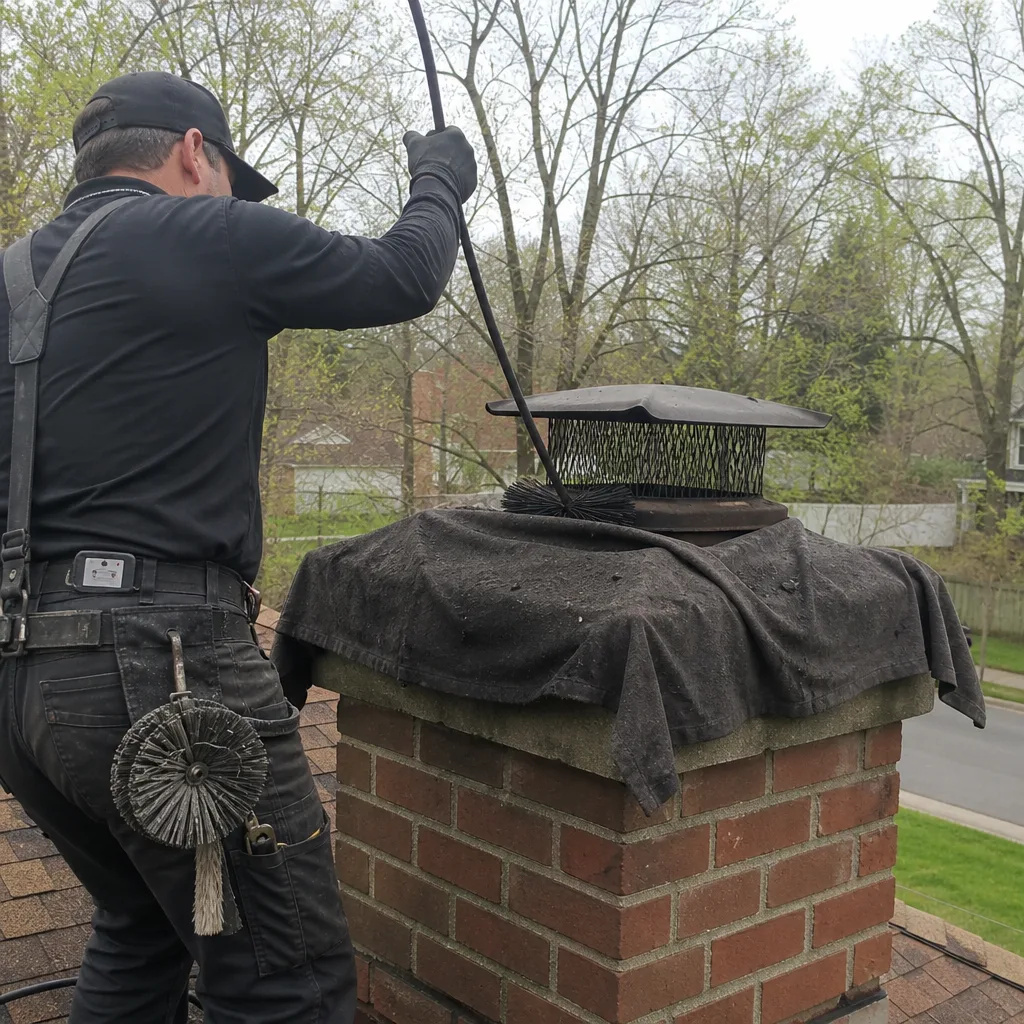
 Sweep & inspection
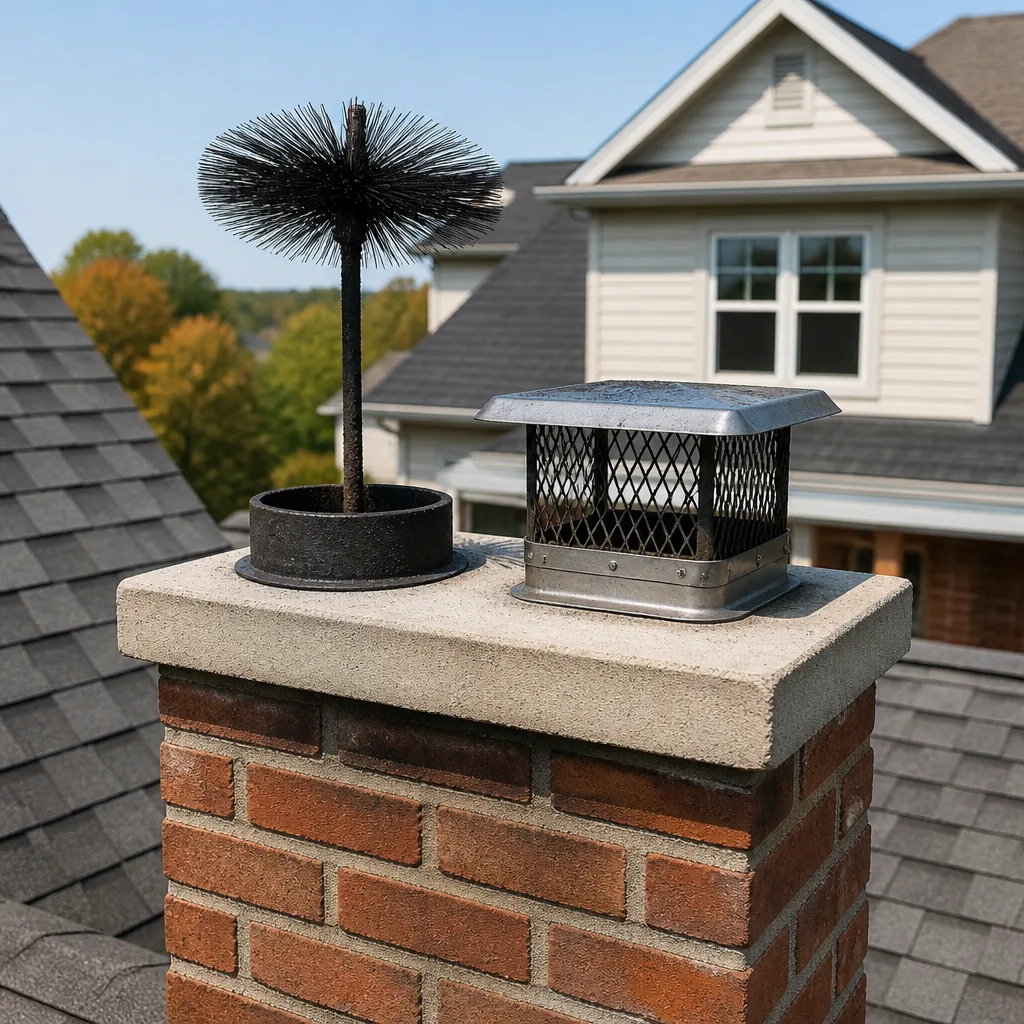
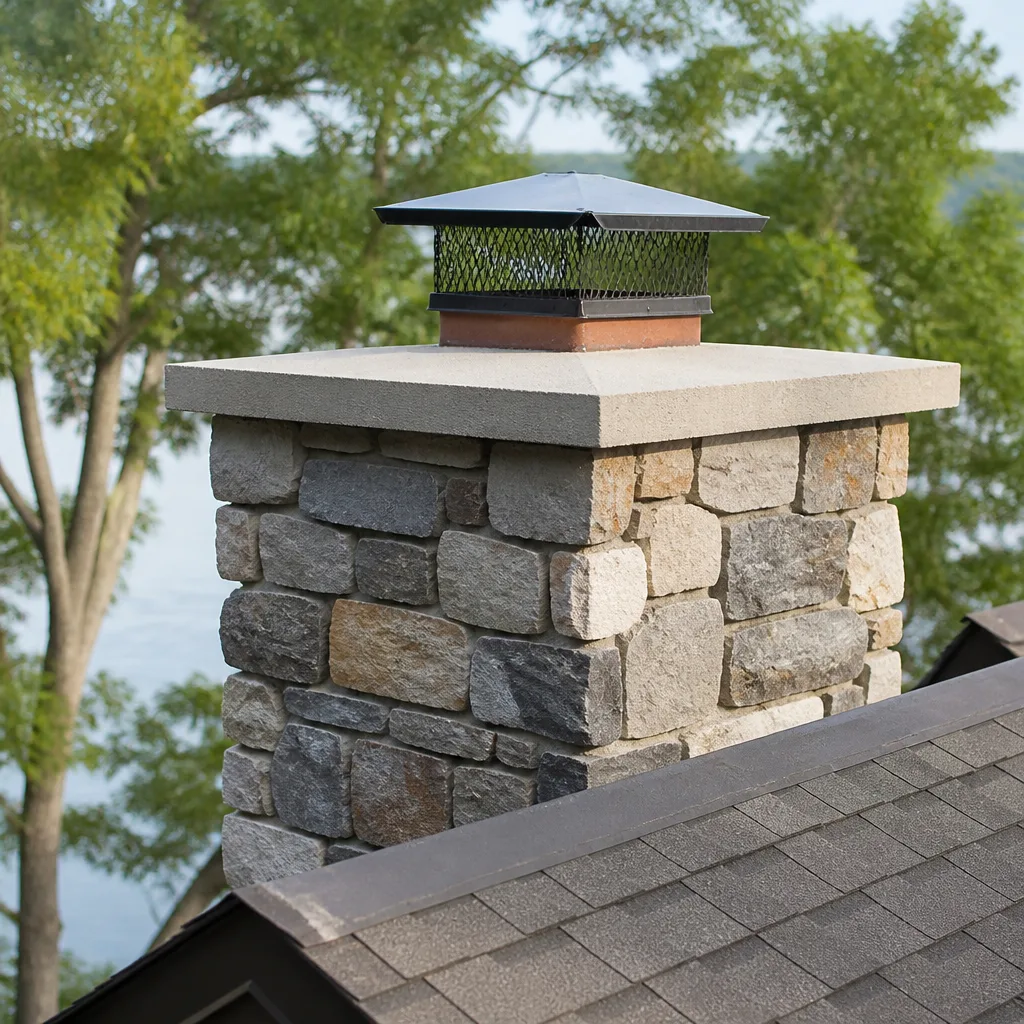 Caps & crowns
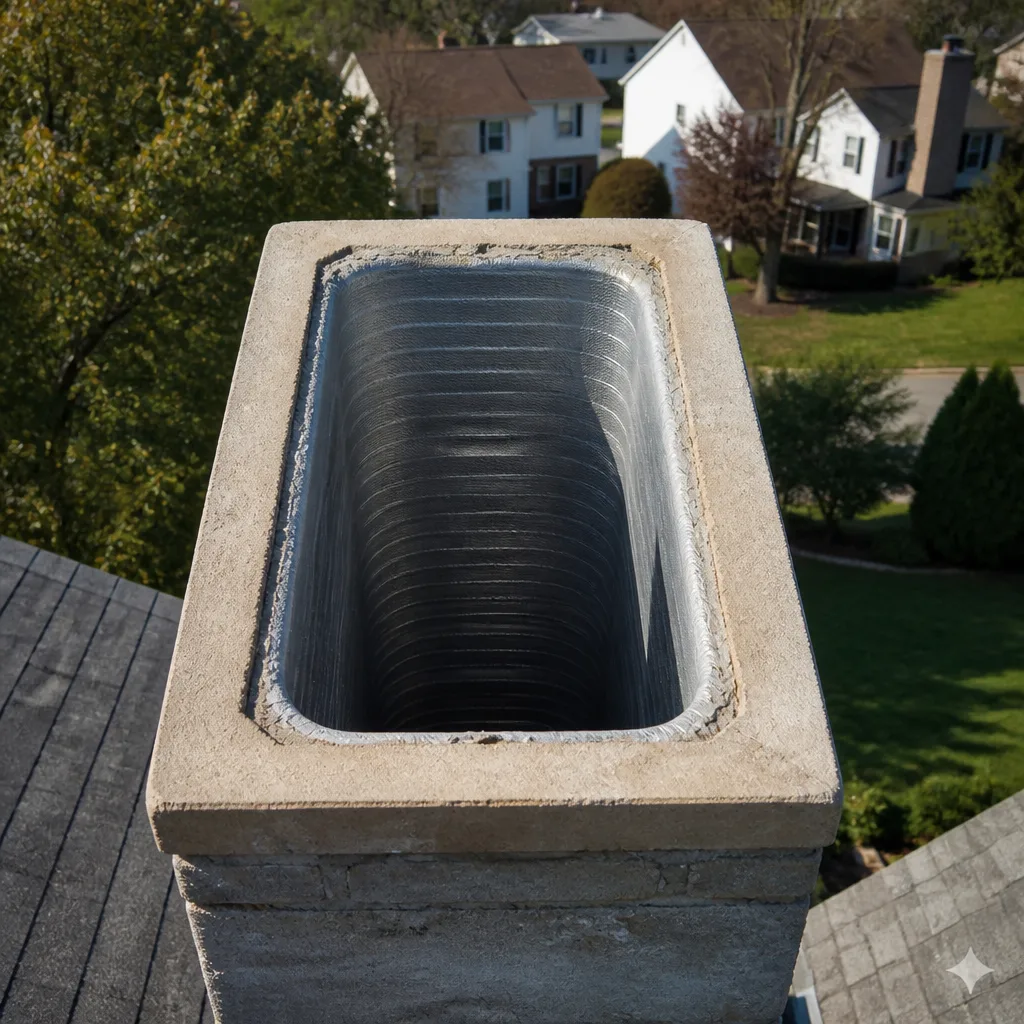 Flue relining
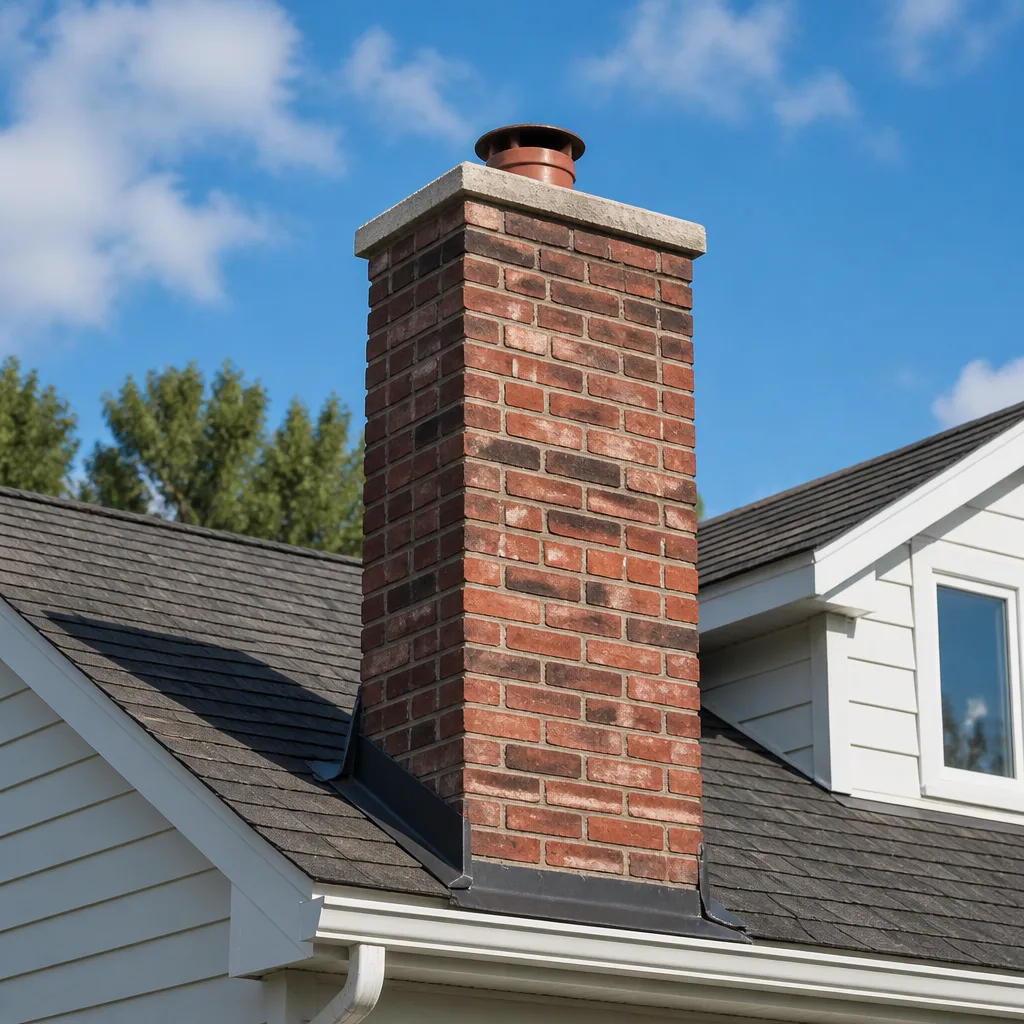 Masonry repair
 Gas fireplace service
Level 1 sweep and inspection to the NFPA 211 annual standard - flue, crown, cap, and flashing checked and photographed
Chimney sweep logs do not sweep chimneys. They loosen some creosote - which then falls where a brush and vacuum still have to collect it.
Chimney Cleaning Warning Signs: A Madison Homeowner’s Reference Guide
A white stain on your chimney’s exterior brick isn’t cosmetic. It’s efflorescence, and it means water is moving through your masonry and evaporating on the surface. The interior of that chimney is wetter than it should be, and it’s been that way for a while. Most chimney problems announce themselves long before anything fails, but the signs show up in different places: on the brick outside, on the firebox wall inside, in the sound of a fire that won’t draw. This guide decodes those physical symptoms in plain language, organized by where in the house you’ll find them, so you can triage what you’re seeing before you call anyone. We’ve written it from Madison, where a wet winter and a long burning season put chimneys through real work, and where we see these symptoms on the same kinds of houses year after year.
Quick Answer
The main chimney warning signs in Madison are white staining or flaking brick on the exterior, a cracked or tilting crown, a loose cap, smoke rolling back into the room, a sour smell from the fireplace in warm months, and staining on the wall above the firebox opening. Any sign that involves smoke entering the living space, a strong chemical smell, or visible soot staining inside the firebox means stop using the fireplace until a professional has looked at it. The rest are signs to book a chimney sweep and inspection soon, not signs to panic about tonight.
Styles & brands we work with
- Sweep & inspection
- Caps & crowns
- Flue relining
- Masonry repair
- Gas fireplace service
Table of Contents
- What exterior warning signs mean for your chimney’s structure
- Interior symptoms: smoke, odors, and staining at the firebox
- Sounds and airflow: how to tell normal from abnormal
- Stop-use signs versus signs that can wait for an appointment
- How to photograph and document warning signs before you call
- How often Madison chimneys need a sweep and when to book
- Common mistakes to avoid
- When to call a professional
- Frequently asked questions
What exterior warning signs mean for your chimney’s structure
The outside of a chimney takes the weather first, so the earliest warnings usually show up there. Learning to read them tells you what’s happening to the masonry and the crown, which are the parts that protect everything below them. Here’s what each exterior symptom typically points to.
- Efflorescence (white staining): Water carrying dissolved salts has moved through the brick and evaporated at the surface, leaving a white, powdery deposit. It means moisture is getting in and the masonry is staying wet longer than it should. Wipe a little off and see if it returns: if it does, water is still moving.
- Spalling brick: The face of the brick is breaking off, often peeling in flakes or crumbling at the corners. This is what happens when masonry repeatedly freezes while wet. It’s structural, not cosmetic, and it tends to accelerate once it starts.
- Cracking or flaking crown: The crown is the concrete cap at the very top that sheds water away from the flue. Hairline cracks let water in, and water that freezes in a crack widens it. A crown with visible cracks or missing chunks is no longer doing its job.
- Cap displacement: The chimney cap is the protective cover on top of the flue opening. If it’s tilted, sitting loose, or missing, rain, animals, and debris get straight into the flue. A cap that has shifted is one of the fastest ways a chimney accumulates water damage.
These four problems connect to each other. A failing cap lets water in, the crown cracks, water soaks the masonry, and the brick spalls through freeze-thaw cycles. In our experience, water intrusion is the leading cause of long-term chimney damage, which is why we treat chimney cap & crown work as a core service rather than an afterthought. Getting a cap and crown sorted early is usually far less work than rebuilding the top of a chimney later. In Madison, where the freeze-thaw swing through winter is hard on masonry, this matters more than in milder climates.
Interior symptoms: smoke, odors, and staining at the firebox
Symptoms inside the house often trace back to something you can’t see from the ground. Smoke rollback, sour smells in summer, and staining at the firebox each point to a different part of the system, and together they map to probable causes.
Smoke rolling back into the room
When smoke spills into the room instead of going up the flue, the chimney isn’t drafting properly. Common causes are a flue blocked by creosote buildup, a flue that’s the wrong size for the fireplace opening, negative pressure in a tightly sealed house, or a flue that has partially collapsed or come apart internally. Smoke rollback is the single most reliable signal that the flue needs a proper inspection. It’s not a matter of “the fire being stubborn,” even if it draws fine on the best nights and fails on others.
Fireplace odors in warm months
That sour, smoky smell in the summer comes from creosote and ash deposits reacting with humid air, or from moisture in the chimney. Warm, damp weather pushes the smell back down the flue because the fireplace isn’t drawing the way it does when a fire’s lit. A strong chemical or fuel smell is a different matter and warrants a prompt check. A mild smoky odor is usually a sign the flue is overdue for cleaning.
Staining above the firebox opening
Dark staining on the wall or brickwork just above the fireplace opening usually means smoke and condensation have been rolling out of the top of the firebox rather than going up the flue. Over time it leaves a stain that maps where the smoke escaped. It’s a visual record of the same drafting problem described above, and it’s worth photographing because it tells a technician where to focus.
When the cause turns out to be damaged masonry or a warped firebox, the fix may involve fireplace repair rather than cleaning. Getting the diagnosis right the first time saves you from cleaning a flue that needed a repair instead.
Sounds and airflow: how to tell normal from abnormal
A chimney makes noise, and most of it is normal. The trick is knowing which sounds sit inside the range of ordinary and which ones fall outside it. Airflow matters too, because how a flue drafts tells you a great deal about what’s inside it.
- Wind noise: A steady whistle or a low moan on a windy day is common and usually harmless. It happens when wind crosses the flue opening at certain angles. A cap can smooth some of it out, but occasional wind noise alone isn’t a warning sign.
- Downdraft: A puff of air, ash, or smoke coming down when you first light the fire can be a cold-start downdraft from a cold flue. If it happens on cold starts and settles once the flue warms, it’s normal. If it happens on every fire regardless of temperature, the flue isn’t overcoming pressure from the house, which points to a real drafting problem.
- Roaring or a rushing sound that wasn’t there before: A flue drawing noticeably harder or louder than it used to can indicate an internal breach or a change in how the chimney pulls. Worth an inspection.
- Something rattling or flapping: Often a loose cap or damper. A cap that’s shifted can rattle in the wind and may be letting water in.
- Animals or scratching: Birds and squirrels get into unlocked or missing caps. If you hear scratching near the flue, the flue is open somewhere it shouldn’t be.
A simple airflow test: light a stick of incense or a match and hold it near the fireplace opening before you light a fire. The smoke should rise steadily up and out. If it drifts sideways into the room, the flue isn’t drawing correctly. That’s a rough check, not a diagnosis, but it tells you whether to book an appointment sooner. Smoke coming down is a stop-use sign; weak drafting is a reason to schedule.
Stop-use signs versus signs that can wait for an appointment
Not every warning sign means put the fireplace out tonight. Knowing which conditions call for stopping use immediately and which ones let you keep using the fireplace until a scheduled appointment keeps a stressful moment from turning into an unnecessary one. Here’s the split we go by.
Signs to stop using the fireplace immediately
- Smoke or soot staining that appears suddenly while a fire is burning, especially if smoke enters the room.
- A strong fuel or chemical smell, or any smell you can’t identify coming from the chimney or firebox.
- Soot or dark staining on walls or ceiling in the room, which can point to backdrafting or a blocked or breached flue.
- Visible creosote glaze on the inside of the firebox or flue (driveway or flashing a light up can show it). Glazed creosote is the fuel for chimney fires and needs treating before the next fire.
- A damaged firebox, loose firebrick, or a firebox warmer than it should be on the outside wall.
Signs to book for the next available appointment
- White efflorescence, spalling brick, a cracked crown, or a loose cap you can see from the ground.
- A mild smoky smell from the fireplace in warm months.
- An occasional puff of smoke on cold starts.
- A quiet sound change in the flue that isn’t accompanied by smoke or smell.
When we see smoke entering the living space, we recommend treating it as a carbon monoxide concern and stopping use until we’ve looked at it. A chimney is designed to carry smoke and combustion gases up and out; when it fails at that, you don’t want to guess. The signs in the second list are not harmless, but they’re the kind you can address in a scheduled visit before your next fire.
How to photograph and document warning signs before you call
A good set of photos shortens the time between “something’s wrong” and “here’s your fix.” It also keeps you from having to describe a symptom from memory when a technician arrives. Here’s how we suggest homeowners document what they’re seeing before they call.
- Step back and take a wide shot of the whole chimney from the ground, from a safe distance. A wide shot gives context: the top, the brick field, and the roof line in one frame.
- Take a close-up of the specific symptom. Get close enough to show texture. For efflorescence, capture the powdery surface; for a cracked crown, frame the crack; for a loose cap, show the tilt.
- Mark a ruler or a coin next to the defect if you can do it safely from the ground. Scale helps a technician estimate the problem before arriving.
- Photograph any interior symptom separately. Staining above the firebox, a close-up of the firebox wall, and the damper position from the floor.
- Write down what you notice and when. Does smoke roll back only on windy days? Does the smell appear in summer or only when the fire is first lit? Note the pattern, not just the symptom.
- Take a note of anything you hear, and when. A whistle, a rattle, a puff of air at the opening.
From the ground, with a phone, that’s enough to help a technician prioritize your visit. We don’t recommend getting on the roof to photograph a cap or crown unless you’re experienced with heights and safe ladder placement; the photos from below are usually enough to plan the visit. If you do go up, stay off the roof in wet or icy conditions. The point of a photo set is triage, not a diagnosis.
If you’re unsure what you’re seeing, call us and describe it. Madison Chimney Sweep Pros handles the whole system, so we can usually tell from your description and photos which service you’ll need.
How often Madison chimneys need a sweep and when to book
The standard guidance from the chimney industry is a sweep and inspection at least once a year, or more often if you burn heavily. In Madison, the burning season is long, and heavy use through the winter is where the risk builds up. Book before the season starts so you’re not waiting in a long line for an appointment when the first cold snap hits.
How often you should actually sweep depends on how you burn, not just how many years have passed. A fireplace used a few times a month through winter accumulates creosote more slowly than one burning several nights a week. Wood that’s unseasoned or high-moisture creates more creosote than dry wood. A gas or oil appliance needs its own inspection schedule, because a gas flue doesn’t build creosote the way a wood flue does but still has to be checked for corrosion and drafting. A wood flue and a gas flue aren’t the same system and shouldn’t be treated as one.
- Annual sweep and inspection: the minimum for any fireplace in regular use.
- Twice a year: a household that burns heavily through the winter, or a wood stove used as a primary heat source.
- Before the season: the best time to book, both to avoid waits and to fix a warned-about problem before the next fire.
- After any sign from the stop-use list: don’t wait for the annual sweep if you’ve seen smoke, soot, or a strange smell.
Our chimney sweep includes a camera inspection and a photo report, so you get to see what we saw before a fix is recommended. That matters more than the sweep itself: a lot of homeowners have been told they need major work with no way to verify it, and a photo report lets you check for yourself.
How the products behind a proper repair fit the diagnosis
A warning sign tells you something is wrong; it rarely tells you exactly what the fix will be. That’s where the materials side matters. A flue that’s cracked or flaking on the inside may be resurfaced with HeatShield rather than rebuilt, extending the life of the chimney without demolition. A flue that’s too damaged for resurfacing or that needs a new liner can be relined with a DuraFlex system, which we install for wood, gas, and oil appliances. Damper work often calls for an Olympia Chimney top damper, and cap and crown work uses professional-channel components rather than retail-grade parts.
The point of naming these materials is that a proper chimney diagnosis ends with a specific fix, not a shrug. A flue that’s been swept and found to be sound just needs the sweep; a flue that’s leaking or damaged needs a repair that matches what the camera showed. Our full range covers inspection, sweep, fireplace repair, chimney repair, and cap and crown, so you don’t have to juggle subcontractors to get from “symptom” to “fixed.” When a flue can be resurfaced with HeatShield instead of rebuilt, that’s often the difference between a repair and a major project. A flue that needs a DuraFlex liner gets the correct liner for the fuel type, sized to the appliance, not a one-size part.
This is also why we ask a homeowner to bring the photos from the previous section. Seeing the symptom is the start; the camera inspection shows the inside, and the material selection follows the camera, not the guess. A sweep-only crew can clean a flue but can’t resurface it or reline it. A general handyman can install a cap but won’t tell you the flue behind it is failing. We handle both ends because they belong to the same system.
See the difference
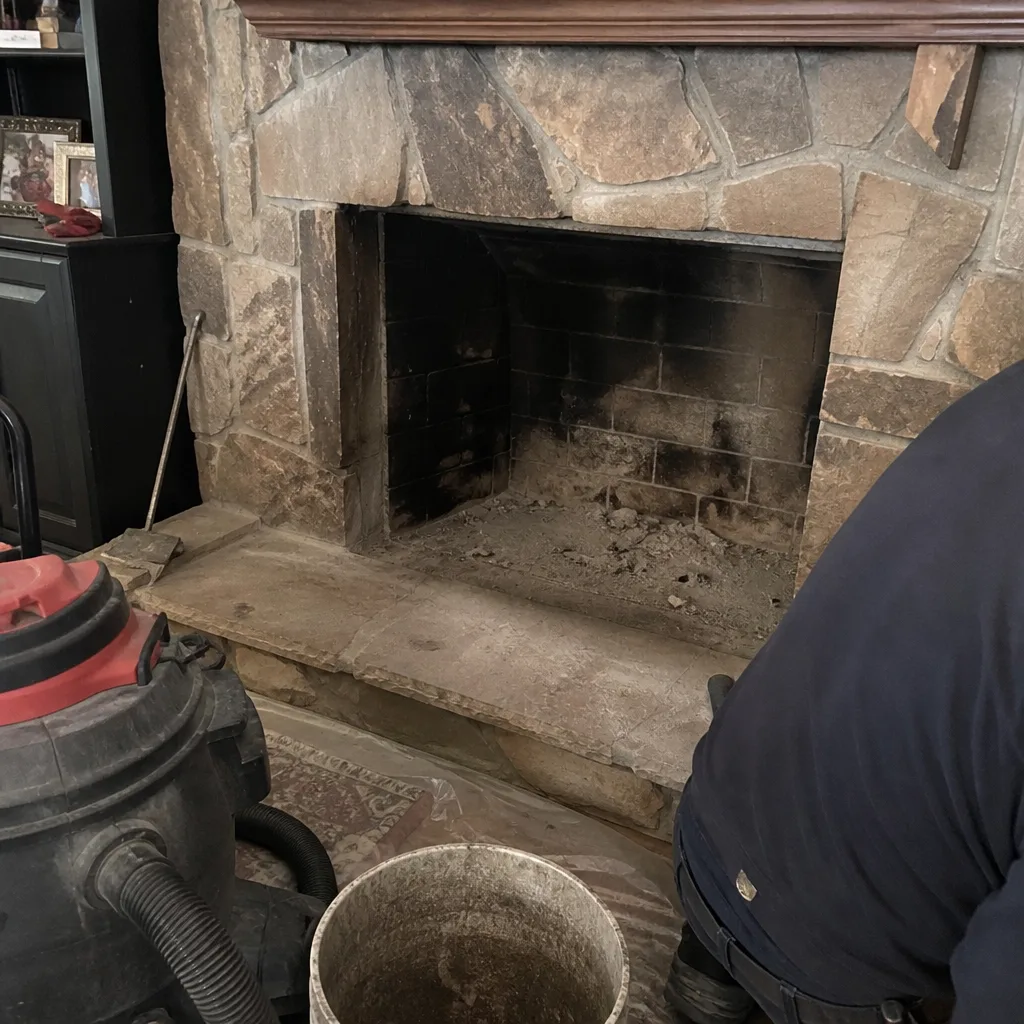 Before
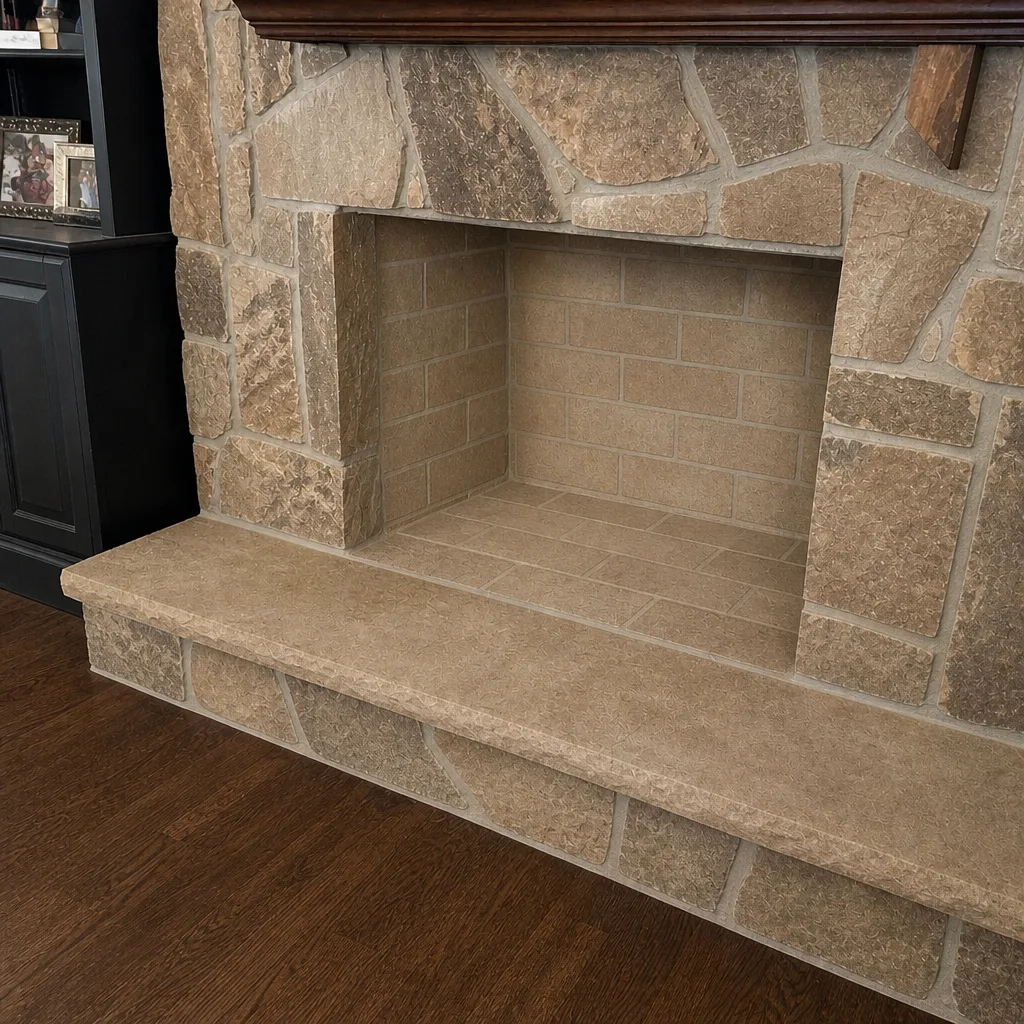 After
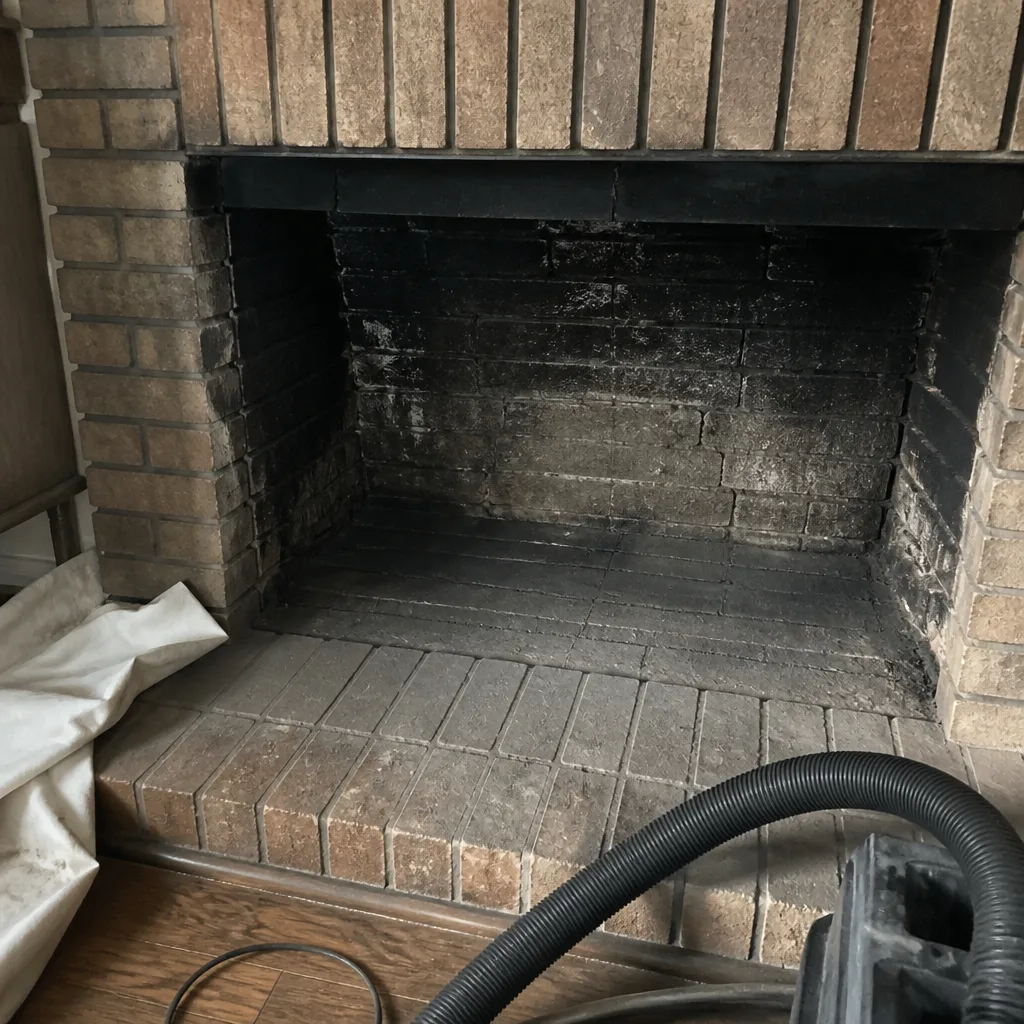 Before
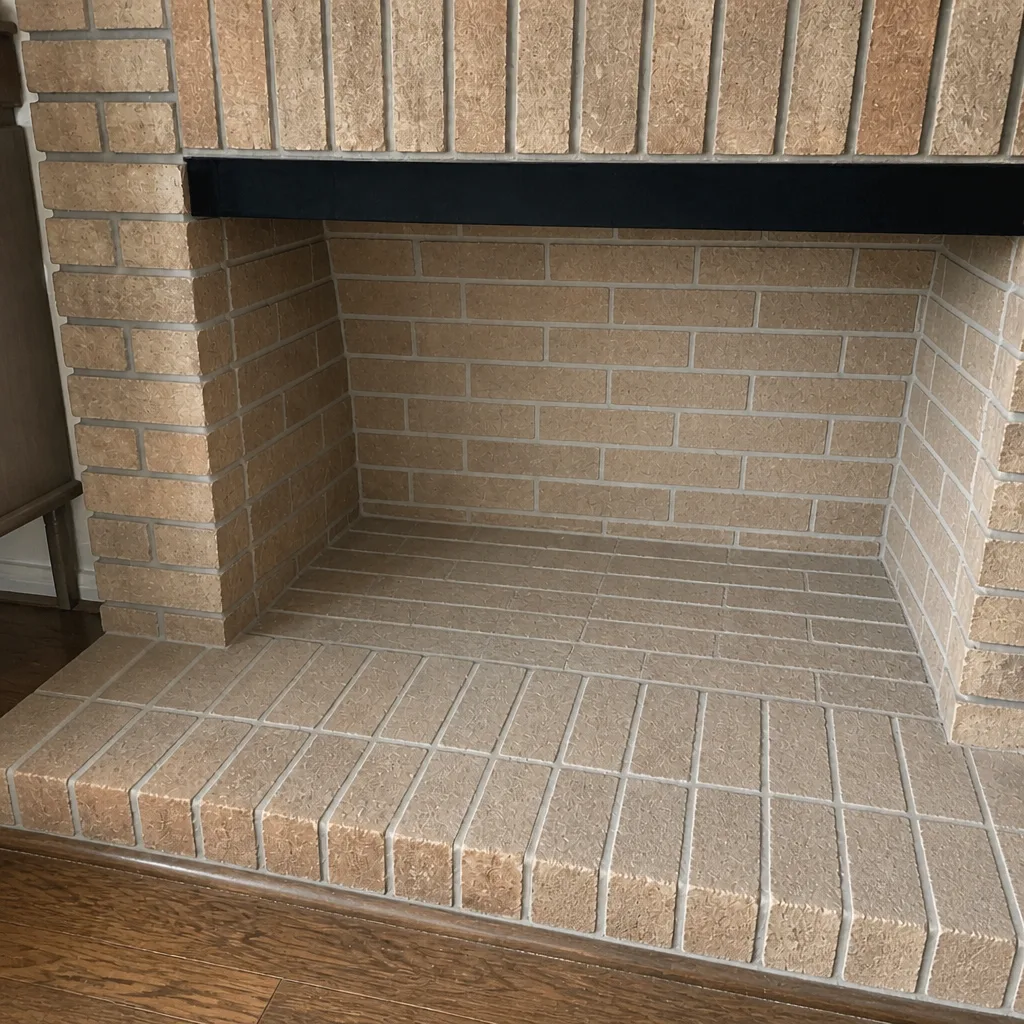 After
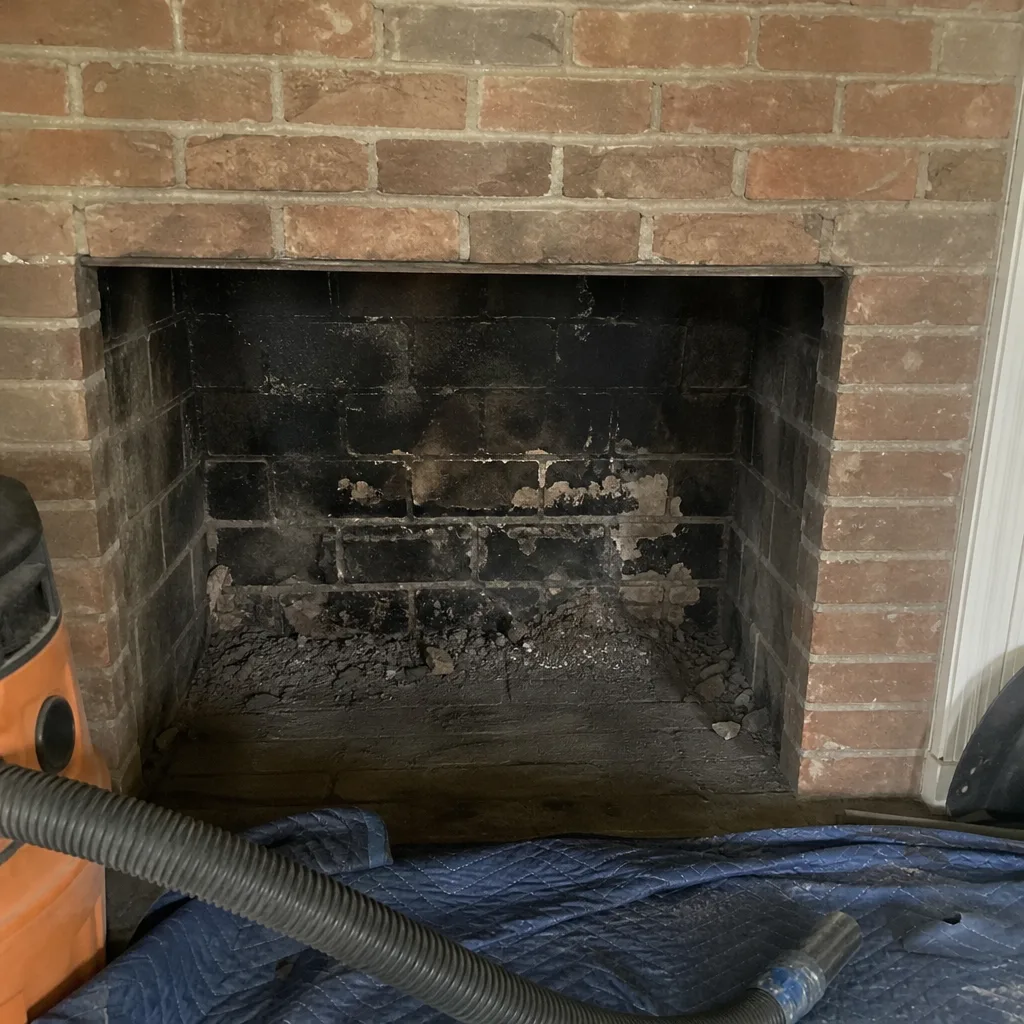 Before
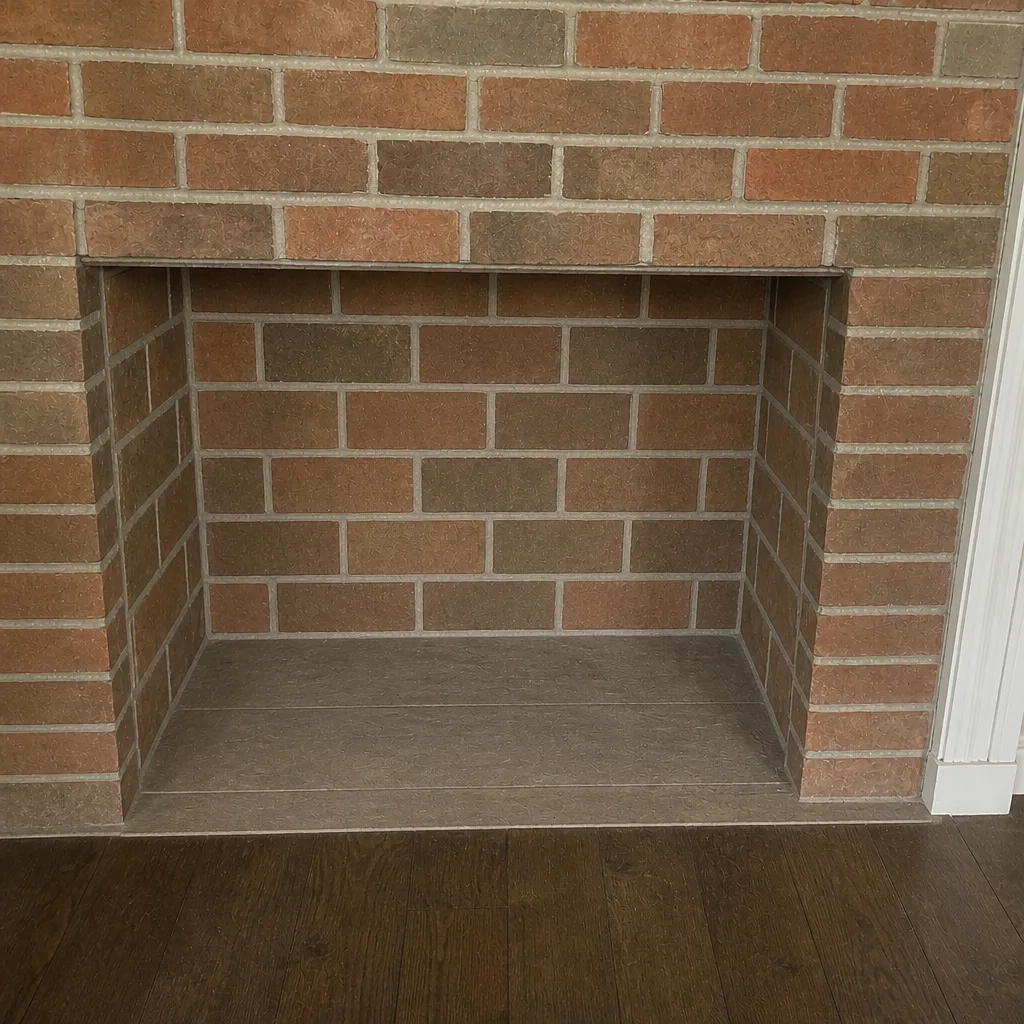 After
What each interior symptom can mean for gas and wood appliances
Gas and wood fireplaces fail in different ways, and the warning signs that matter for each aren’t identical. Knowing which symptoms belong to which appliance keeps you from reading a gas appliance’s problem as a wood-burning one, or the reverse.
Wood-burning appliances
A wood fire generates real creosote, and the signs that matter most are smoke rollback, glazed creosote on the inside of the firebox or flue, and a smell of creosote or ash that lingers in warm weather. Soot staining above the firebox and a fire that’s hard to light or slow to draw are also frequent. The trouble with a wood flue is that the creosote layer isn’t visible from the living room, so a rough read from the ground or the firebox is all a homeowner can do. A camera inspection sorts the inside.
Gas appliances
A gas flue doesn’t produce the creosote a wood flue does, but it can produce corrosion from the water vapor gas burning sends up. A gas fireplace with a strange smell, a soot deposit that appears from nowhere, or a flue that drafts unevenly deserves a check. Carbon monoxide risk is a specific concern with gas, so any fuel smell or concern about combustion gases means stopping use and calling. The signs that you can wait on are quieter: uneven drafting, a loose cap, or a crown that needs attention.
In our experience, a homeowner who knows whether their appliance is wood or gas, and watches the specific signs the appliance produces, catches a problem earlier than someone watching a generic checklist. That’s the point of organizing the signs by where you see them and what they mean.
Common Mistakes to Avoid
- Reading efflorescence as a paint or stain problem. White staining on brick isn’t something a coat of paint fixes. Treating it as cosmetic lets the water keep moving through the masonry.
- Assuming a cap is optional. A missing or loose cap is the front door for water, birds, and debris. Many homeowners don’t notice it’s failed until there’s staining inside.
- Burning wet or green wood because it was cheaper. Unseasoned wood builds creosote faster than dry wood, and the problem shows up in the flue, not the fire.
- Waiting until winter to book. Madison winters are long, and the appointment list fills up when the first cold snap hits. Booking before the season is the fix.
- Treating a puff of smoke on cold starts as normal forever. An occasional puff on a cold flue is normal; a puff on every fire is telling you something.
- Assuming a general handyman or a sweep-only crew covers everything. Sweeping and repairing are different scopes. A crew that only sweeps can’t reline or resurface a flue, so the repair becomes a second project.
- Getting on the roof to “check it out” without experience. A roof inspection on a wet or icy day is how homeowners end up in the emergency room. Take photos from the ground and let a technician go up.
When to Call a Professional
Call when you see smoke entering the room, smell fuel or an unfamiliar chemical odor, notice soot on the walls or ceiling in the room, or find glazed creosote inside the firebox. Call if you’re unsure about any of those and want to describe what you’re seeing. The physical signs on the exterior (efflorescence, spalling brick, a cracked crown, a loose cap) are reasons to book a visit, not to panic. And call for the annual sweep and inspection even when nothing’s wrong, because the inside of a flue isn’t visible from the living room. Madison Chimney Sweep Pros offers free estimates in Madison. Call (855) 658-5258. We answer 24/7. Fast dispatch from 7am to 7pm, Sunday through Friday.
Frequently Asked Questions
A routine chimney sweep in Madison is typically priced per job by a written estimate, so the figure depends on the flue and what’s found on inspection. The photo report is part of the visit, and the estimate is free. Call (855) 658-5258 for an exact quote. Estimates are free.
White staining or spalling brick on the exterior, a cracked crown or loose cap, smoke rolling back into the room, and a sour smell from the fireplace in warm months are the most common. Any of them indicates the chimney needs an inspection, and smoke entering the room means stop using the fireplace until it’s checked.
The white stain is efflorescence, and it means water is moving through the masonry and evaporating at the surface. It signals that the interior of the chimney is wetter than it should be, and it usually traces back to a water path from the top. It’s worth a professional look rather than a cosmetic fix.
It depends on the sign. Smoke entering the room, soot on the walls, a fuel smell, or glazed creosote means stop using the fireplace until a professional has seen it. Efflorescence, a cracked crown, a loose cap, or a mild summer smell are reasons to book an appointment, not stop tonight.
A sour or smoky odor in warm months comes from creosote and ash deposits reacting with humid air, or from moisture in the chimney. Damp weather pushes the smell down the flue because the fire isn’t drawing. It usually means the flue is overdue for a sweep or has a moisture problem behind it.
Once a year at minimum, or twice a year if you burn heavily through the winter. In Madison, where the burning season is long, booking before the weather turns avoids a filled schedule. If you’ve seen any sign from the stop-use list, schedule sooner rather than waiting for the annual sweep.
Look from the ground for a cap that’s tilted, sitting loose, or missing entirely. A shifted cap in wind can also rattle, which you may hear from inside the house. A damaged cap is an easy fix to schedule and important to address, because it’s the fastest route for water to get into the flue.
If smoke drifts into the room instead of going up the flue, stop using the fireplace and book an inspection. The cause could be a blocked or creosote-loaded flue, a wrong-sized flue, pressure from the house, or a partially collapsed internal flue. A camera inspection is the reliable way to find out which.
Where to go from here
The warning signs in this guide aren’t separate problems. They’re one system telling you it’s out of balance: a cap letting water in, a crown cracking, a flue that’s losing its lining, a fire that no longer draws. Sort them by where you see them, make the call on stop-use versus book-an-appointment, and photograph what you see. The point of a proper diagnosis is a fix, not just a report; we handle inspection, sweep, fireplace repair, chimney repair, and cap and crown because they belong together. If you’re in Madison and you’d rather have a specialist look at the whole system, that’s what we do. Call (855) 658-5258. We answer 24/7. Fast dispatch from 7am to 7pm, Sunday through Friday. A call outside dispatch hours is booked into the next opening, Sunday through Friday, 7am to 7pm.
The Bottom Line
Most chimney problems show physical signs long before they fail. The white stain, the spalled brick, the cracked crown, and the loose cap all point to water damaging the masonry from the inside. Smoke rollback, summer odors, and firebox staining point to drafting and creosote. Sort the sign by where you see it, and use the stop-use list to decide whether to book an inspection or address it at the next scheduled sweep. In Madison, book before the burning season and get a camera inspection with a photo report so you can verify what needs fixing. Our technicians have up to 12 years of experience, and we work with professional-grade materials, the same brands certified chimney specialists specify, so a warning sign ends at a fix, not a shrug.
Written by the team at Madison Chimney Sweep Pros.